All About: All About Antelope
All About Antelope is the number one internet website for antelope and antelope related matters. We present the latest in antelope research, news and recipes for dozens of users around the world.
Found in 2015 by the antelope society of Africa wanted to spread the news of antelope around the world and commissioned there technical partners to produce this site.
About Antelope
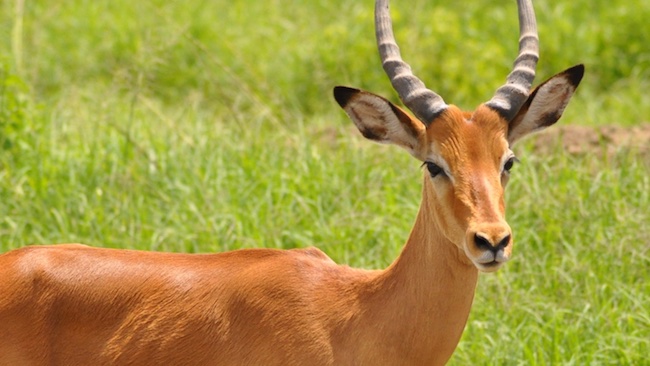
An antelope is a member of a number of even-toed ungulate species indigenous to various regions in Africa and Eurasia. Antelopes comprise a wastebasket taxon (miscellaneous group) within the family Bovidae, encompassing those Old World species that are not cattle, sheep, buffalo, bison, or goats; even so, antelope are generally more deer-like than other bovids. A group of antelope is called a herd.
The English word "antelope" first appeared in 1417 and is derived from the Old French antelop, itself derived from Medieval Latin ant(h)alopus, which in turn comes from the Byzantine Greek word anthólops, first attested in Eustathius of Antioch (circa 336), according to whom it was a fabulous animal "haunting the banks of the Euphrates, very savage, hard to catch and having long, saw-like horns capable of cutting down trees". It perhaps derives from Greek anthos (flower) and ops (eye), perhaps meaning "beautiful eye" or alluding to the animals' long eyelashes. This, however, may be a later folk etymology. The word talopus and calopus, from Latin, came to be used in heraldry. In 1607, it was first used for living, cervine animals.
Species
The 91 species, most of which are native to Africa, occur in about 30 genera. The classification of tribes or subfamilies within Bovidae is still a matter of debate, with several alternative systems proposed.
Antelope are not a cladistic or taxonomically defined group. The term is used to describe all members of the family Bovidae that do not fall under the category of sheep, cattle, or goats. Usually, all species of the Alcelaphinae, Antilopinae, Hippotraginae, Reduncinae, Cephalophinae, many Bovinae, the grey rhebok, and the impala are called antelopes.
Distribution and habitat
No antelope species is native to Australasia or Antarctica, nor do any extant species occur in the Americas, though the nominate saiga subspecies occurred in North America during the Pleistocene. North America is currently home to the native pronghorn, which taxonomists do not consider a member of the antelope group, but which is locally referred to as such (e.g. Antelope Valley). In Europe, several extinct species occur in the fossil record, and the saiga was found widely during the Pleistocene but did not persist into the later Holocene, except in Russian Kalmykia and Astrakhan Oblast. More species of antelope are native to Africa than to any other continent, almost exclusively in savannahs, with 20-35 species co-occurring over much of East Africa. Because savannah habitat in Africa has expanded and contracted five times over the last three million years, and the fossil record indicates this is when most extant species evolved, it is believed that isolation in refugia during contractions was a major driver of this diversification. Other species occur in Asia: the Arabian Peninsula is home to the Arabian oryx and Dorcas gazelle. India is home to the nilgai, chinkara, blackbuck, Tibetan antelope, and four-horned antelope, while Russia and Central Asia have the Tibetan antelope, and saiga.
Many species of antelopes have been imported to other parts of the world, especially the United States, for exotic game hunting. With some species possessing spectacular leaping and evasive skills, individuals may escape. Texas in particular has many game ranches, as well as habitats and climates, that are very hospitable to African and Asian plains antelope species. Accordingly, wild populations of blackbuck antelope, gemsbok, and nilgai may be found in Texas.
Antelope live in a wide range of habitats. Numerically, most live in the African savannahs. However, many species are more secluded, such as the forest antelope, as well as the extreme cold-living saiga, the desert-adapted Arabian oryx, the rocky koppie-living klipspringer, and semiaquatic sitatunga.
Species living in forests, woodland, or bush tend to be sedentary, but many of the plains species undertake long migrations. These enable grass-eating species to follow the rains and thereby their food supply. The gnus and gazelles of East Africa perform some of the most impressive mass migratory circuits of all mammals.